Cost Optimization
When margins tighten, the instinct is often to look at the org chart. But for manufacturers, the biggest cost opportunities are rarely found by cutting people — they're found by fixing the systems those people work within.
True cost reduction is a discipline, not a reaction. It means taking a hard look at where time, materials, and money are quietly leaking out of your operation — through inefficient procurement practices, excess inventory, underutilized capacity, bloated supplier contracts, and processes that have never been challenged because "that's how it's always been done."
The goal isn't to do less. It's to do more with what you already have.
A structured cost reduction engagement identifies the highest-impact opportunities across your entire value chain — from raw material sourcing and production scheduling to overhead allocation and quality-related waste. Changes are prioritized not just by savings potential, but by what's actually implementable without disrupting your output or your people.
The result is a leaner, more competitive operation — one that's built to sustain those savings long after the engagement ends.
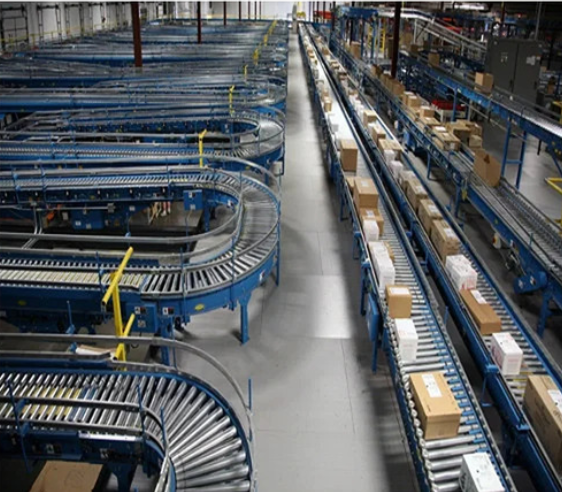
Your supply chain doesn't have to be broken to be costing you. In today's environment, even a well-functioning supply chain is under constant pressure — and the cracks tend to show up in the places that hurt most.
Inventory is one of the most visible — and most mismanaged — levers in the supply chain. Too much of it ties up working capital, inflates carrying costs, and masks the real demand signals your operation should be responding to. Too little brings production to a halt and leaves customers waiting. Getting inventory right isn't just about having the right stock levels — it's about building the visibility, forecasting discipline, and replenishment logic that keeps your operation running without over-investing in buffer stock as a substitute for a better process.
Supplier reliability adds another layer of risk. Late deliveries and inconsistent quality don't just create operational headaches — they ripple downstream into customer satisfaction and margin erosion. Meanwhile, transportation, warehousing, and distribution challenges continue to compound, particularly for businesses operating across global networks where the margin for error is thin.
And then there's demand. Customer expectations have fundamentally shifted — faster lead times, full order visibility, personalized service, and omnichannel fulfillment are now the baseline, not a differentiator. Predicting and responding to that demand without overproducing or underproducing is one of the most difficult balancing acts in modern manufacturing. Price volatility only makes it harder, forcing a constant tradeoff between protecting margin and maintaining the quality your customers expect.
A structured supply chain engagement identifies where your vulnerabilities are and builds the processes, visibility, and supplier relationships needed to address them — so your operation can flex with the market without breaking under the pressure.
Process improvement
Inefficiency rarely announces itself. More often, it hides inside the way work gets done every day — in the handoffs, the approvals, the workarounds that people have quietly built around a process that was never quite right to begin with.
Bottlenecks are one of the most common and most costly examples. When work piles up at a single step — whether it's a sign-off that requires the wrong person, a system that can't keep pace, or a team that's become the default catch-all for too many tasks — the entire operation slows down. Output suffers, lead times stretch, and the pressure cascades upstream and downstream. The bottleneck itself is rarely the real problem; it's a signal that the process around it needs to be redesigned.
Duplication of work is equally damaging, and far more common than most organizations realize. When two teams are maintaining the same data, re-entering information across systems, or completing overlapping steps without knowing it, you're paying twice for output you should be getting once. It burns time, introduces errors, and frustrates the people doing the work — who usually know the problem exists but don't have the authority or visibility to fix it.
Business process improvement starts by mapping how work actually flows through your organization — not how it was designed to flow. From there, the focus is on eliminating the friction points that slow things down, clarifying who owns what, and building processes that scale without breaking.
The result is an operation where your people spend their time on work that matters — not on managing the gaps left by a process that's overdue for a redesign.